
Nine hours behind the wheel is not nine hours at a desk. An office worker can stand up, stretch, walk to the kettle and reset their hips without anyone noticing. A driver on a trunk run or a multi-drop route is held in one position by the pedals, the mirrors and the clock. That is why a driver seat cushion often changes more in a cab than the same product changes in an office. It is fixing a problem you have no other way to escape.
This guide covers what to look for, what to ignore, and where a cushion stops being the answer.
Why driving punishes your body faster than desk work
Sitting is only a problem when it stays static. In an office, you shift, cross your legs, lean back, get up. In a cab, your right leg is committed to the pedals, your hands are committed to the wheel, and a seatbelt anchors your torso. Your pelvis holds one angle for hours. Pressure concentrates in the same two spots: the sit bones and the tailbone, and stays there.
Vibration builds quietly across a shift
Professional drivers are exposed to whole-body vibration, which UK employers have to assess and manage under the Control of Vibration at Work Regulations 2005. Vibration travels up through the seat base into the pelvis and lower spine. It rarely announces itself during the shift. You feel it when you climb out at the end of it.
A cushion is not a substitute for a properly maintained air-suspension seat, and nobody should sell it as one. It adds a dense layer between you and the seat pan, changing how that energy reaches you and how long you can tolerate it.
Multi-drop adds a second problem
Delivery work is not just sitting. It is sitting, then twisting to reach a parcel, then dropping out of a cab that sits higher than a car, then repeating that sixty times. The transitions load your lower back while it is still stiff from being static. Anything that keeps your pelvis in a better position between drops makes those transitions less punishing.
What a driver seat cushion actually does
Two things, and it helps to be clear about both because most product pages blur them.
• It redistributes pressure. A dense foam layer spreads load across a wider contact area instead of concentrating it on the sit bones and coccyx.
• It changes your pelvic angle. Most worn vehicle seats sag in the middle, which rolls your pelvis backwards and rounds your lower back. A wedge or contoured cushion tilts the pelvis forward again so the spine sits closer to its natural curve.
That second point is the one that matters over a long shift. A cushion that only adds softness will bottom out within an hour. A properly contoured orthopedic seat cushion holds its shape and keeps working the geometry of how you sit.
What it does not do is replace lumbar support. A seat cushion works on the seat pan. If your complaint is mid-back or shoulder tension, that is a different fix.
How to choose a driver seat cushion
Foam type and density
High-density memory foam is the practical choice for driving because it recovers its shape after being compressed for hours. Cheap open-cell foam compresses flat and stays flat, which leaves you sitting on the seat frame with an extra layer of fabric in the way.
Gel-topped cushions run cooler but tend to be heavier and firmer, which some drivers dislike on a suspension seat. If you are choosing between formats, a memory foam cushion built for long sitting hours is the safer default for cab use.
Shape: wedge, coccyx cutout, or both
• Wedge: front edge lower than the back, tilting the pelvis forward. Best if you find yourself slumping and sliding down the seat.
• Coccyx cutout: U-shaped channel removed at the rear so the tailbone contacts nothing. Best if your pain is specifically at the tailbone or after a fall or a long stint on a hard seat.
• Contoured with both: Moulded well for the sit bones plus a relief channel. This is the format most professional drivers get on with, because it handles pressure and angle at the same time.
Donut cushions get recommended a lot online. They are designed for post-surgical and post-natal use, not for eight hours of driving, and they tend to be unstable under a seatbelt.
Thickness, and why it is a safety question
This is the part that gets skipped, and it matters more in a vehicle than anywhere else. Raising your seating position changes four things at once:
• Headroom, which is tight in some cabs and non-negotiable in others.
• Mirror sightlines, including the near-side and kerb mirrors you rely on for multi-drop.
• Seatbelt geometry: the lap belt must sit across your pelvis, not your stomach.
• Pedal reach and knee angle. If a cushion pushes you forward enough that you are stretching for the clutch, it is the wrong cushion.
Fit the cushion, then re-do your full seat and mirror setup before you move off. If you cannot get your mirrors and belt right with it in place, it is not the cushion for your vehicle.
Non-slip base
A cushion that migrates every time you get in and out is worse than no cushion, because you end up sitting half on it and half off it with your pelvis tilted sideways. Look for a rubberised or gripped underside. On a smooth vinyl HGV seat this is the single most common failure point.
Cover and washability
Cab temperatures swing, and delivery work means sweat. A removable, machine-washable cover in a breathable fabric is worth more in a vehicle than in any other setting. A cushion you cannot wash becomes a cushion you stop using by month three.
Fit to your seat pan
Measure the seat pan width and depth before buying. A cushion wider than the pan will ride up the bolsters and tilt you. On air-suspension seats, check that the cushion does not interfere with the seat travel or the side adjusters. Most standard cushions are sized for car and office seats, so on a wide HGV seat a smaller cushion can float rather than sit flush.
Do the free adjustments first
A cushion works far better on a seat that is already set up properly. Before you buy anything, spend ten minutes on this:
• Set seat height so your hips are level with or slightly above your knees.
• Set the seat pan tilt so your thighs are supported along their length without pressure behind the knee.
• Set the backrest to roughly 100 to 110 degrees, not bolt upright.
• Wind the lumbar dial out until it fills the gap in your lower back, then back off slightly.
• Bring the wheel to you rather than reaching for it.
• On a suspension seat, set the weight adjustment to your actual weight. A lot of drivers never touch this, and it is the reason the seat is bottoming out.
If discomfort disappears after that, you have saved yourself the purchase. If it improves but does not go, a cushion is a reasonable next step.
A realistic routine for long shifts
Under GB and EU drivers’ hours rules, you take a 45-minute break after four and a half hours of driving. That break is already in your day, so use the first three minutes of it deliberately.
• Stand up fully and let your hips extend before you walk anywhere.
• Ten slow shoulder rolls backwards.
• Five gentle back extensions, hands on the small of your back.
• Walk the length of the trailer and back.
On multi-drop, you are getting out constantly, which helps. The trap there is the twisting reach into the load space. Turn your feet before you turn your torso, and you take a lot of load off the lower back over sixty drops.
When a cushion is not the answer
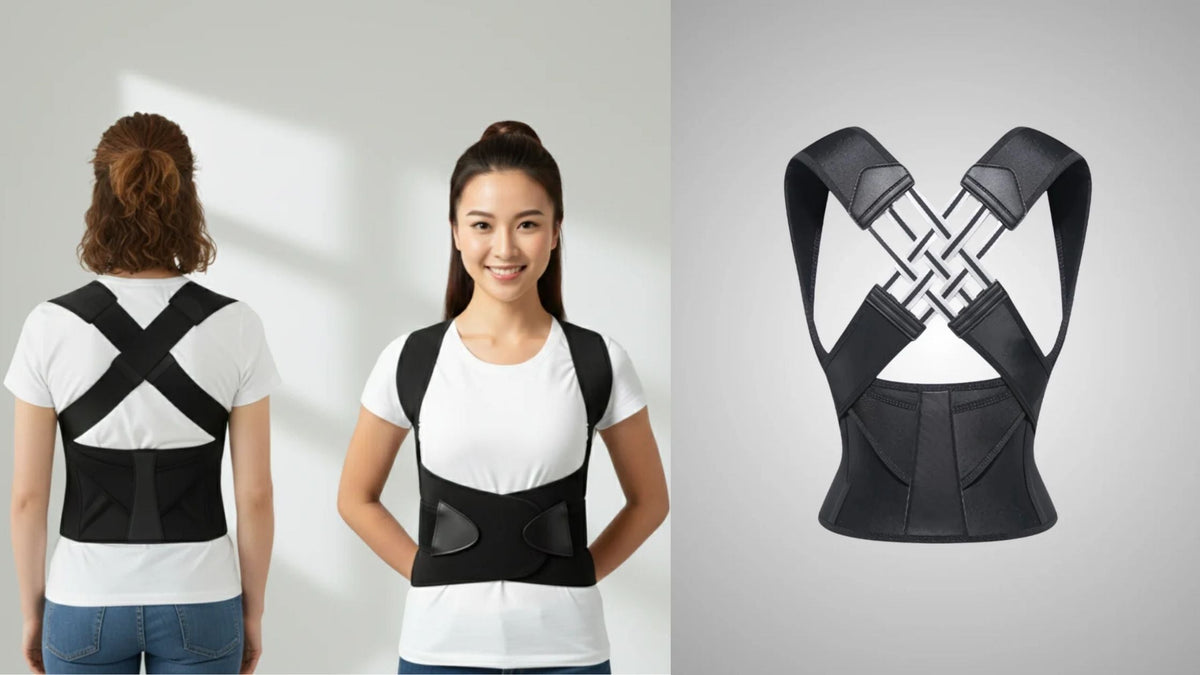
A seat cushion addresses the seat pan. If your discomfort sits between the shoulder blades, in the neck, or shows up as a rounded upper back on video calls and in photos, the problem is thoracic, and a cushion will not reach it. An adjustable posture corrector works on that part of the chain instead, worn for short periods rather than all day.
Some symptoms are not an equipment problem at all. Speak to your GP or a physiotherapist rather than buying anything if you have:
• Pain that radiates below the knee, or pins and needles down one leg.
• Numbness or weakness in a foot or leg.
• Pain that wakes you at night or is present when you are not sitting.
• Any change in bladder or bowel control, which needs urgent medical attention.
Nothing in this article is medical advice, and no cushion treats an underlying condition.
Final Thoughts
At Clessio, we focus on everyday comfort solutions designed to support people who spend long periods sitting, whether that is behind the wheel, at a desk, or at home. If you are looking for extra support during long shifts, explore the Clessio Orthopedic Comfort Seat Cushion and choose a setup that works with your body, your vehicle, and the way you drive.
Comfort on a long shift is not about adding the thickest or softest cushion you can find. It is about creating a driving position you can comfortably and safely maintain for the hours ahead.
Frequently asked questions
Is it safe to use a seat cushion while driving?
Yes, provided you reset your driving position after fitting it. The cushion must not stop the lap belt sitting across your pelvis, must not obstruct your mirror sightlines, and must not push you so far forward that pedal reach is compromised. Use a cushion with a non-slip base so it cannot shift while you are driving.
Wedge or coccyx cutout for long-distance driving?
A contoured cushion with both features suits most long-distance drivers. Choose a plain wedge if your main issue is slumping and sliding forward. Choose a pronounced coccyx cutout if the pain is specifically at the tailbone.
Will a seat cushion work on an air-suspension HGV seat?
It can, but check two things. First, set the seat’s weight adjustment correctly, because a badly set suspension seat causes more discomfort than any cushion can fix. Second, measure the seat pan. Wide HGV seats can leave a standard cushion floating rather than sitting flush.
How thick should a driver seat cushion be?
Thick enough to stop you feeling the seat frame, thin enough that headroom, mirror lines, belt position and pedal reach are all unaffected. In a car or van, most drivers get on with a moderate profile. In a cab with limited headroom, go thinner and prioritise foam density over height.
Can I use the same cushion in the cab and at home?
Yes, and most drivers do. A contoured memory foam cushion moves between a vehicle seat, an office chair and a sofa without any change in setup. That portability is a large part of why it is worth buying one good one rather than two cheap ones.
How long does delivery take?
Order processing runs on business days, and delivery time depends on your location. Current shipping timelines are listed in full on the shipping policy page.


Leave a comment
This site is protected by hCaptcha and the hCaptcha Privacy Policy and Terms of Service apply.